Developing Infrastructure
Creating socio-economic and environmentally sustainable practices within communities.
Generating renewable energy to simultaneously empower residents while addressing climate change, air pollution and residents health.

The solar power generation diagram for Community 1 in Khayelitsha.
Electricity and solar power
Perhaps ironically townships are the perfect space to roll out solar power systems, considering there is an abundance of open air through the horizontally spread-out low-density development, as well as it being the most difficult area in any city to adequately provide the necessary services.
One of the most innovative and exciting aspects of the Empower Upgrade Model is the plan to effectively transform Empower developments into independent energy companies.
Not only will this help to make Empower communities function energy-independent while generating vital revenue, but it will also assist the greater context at a city-wide level to reduce the energy load on the grid. The idea may seem far-fetched, but it is gradually becoming a reality as the policies governing South Africa’s electricity infrastructure continue to shift in favour of small-scale generators.
Our proposed model comprises solar panels on all available rooftops, a central plant room housing inverters and batteries, and a private and protected wire network to recirculate the electricity to each home as well as eventually to a grid connection into the local Eskom distribution network. These assets will be collaboratively managed through a dedicated non-profit corporation (NPC) integrated into the respective Communities’ Homeowners Associations.
This will allow the development to export its surplus solar-generated electricity to the Eskom grid or import electricity from Eskom when needed. Electricity generated by the system will first be sold to Empower homeowners at a lower rate than Eskom charges. Any surplus electricity will be sold directly to Eskom or wheeled to the City of Cape Town.
In Empower Community 1 alone, the total annual estimated electricity production yield is 441,666kWh; the estimated self-consumption is 123,037kWh; and so the total electricity export possible is estimated at 318,629kWh!
The NPC will ultimately reinvest revenue generated by electricity sales back into the community, where it will be used for general maintenance, job creation, skills development and education initiatives, providing communal lighting, funding the food garden when necessary and other necessities investments to be required over time.
BT Soweto in photographs
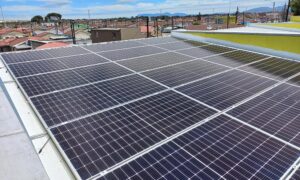
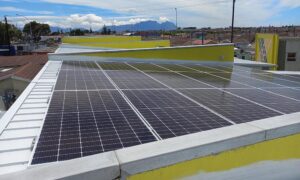
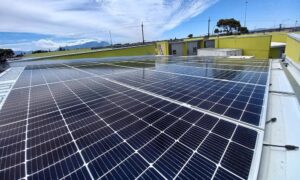
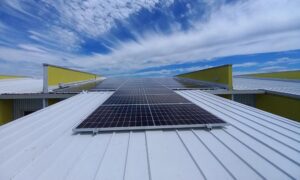
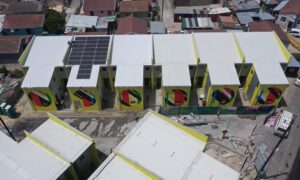
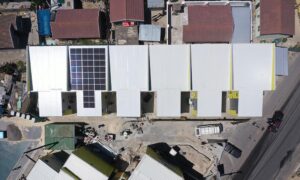
Solar panel installation at Site C in Khayelitsha.
Infrastructure service providers